How to Find Your Signature Scent: A Practical Fragrance Guide

Share
Most people end up with a perfume collection built by accident, a gift here, a sample there, something bought in a rush at the airport. If you want a fragrance that actually suits you, one you will reach for every morning without hesitation, you need a more deliberate approach. Finding your signature scent is not complicated, but it does require knowing a few things most fragrance counters never bother to explain.
Understand the Fragrance Families
Every perfume belongs to a fragrance family, a broad category that describes its overall character. Knowing these families helps you identify what you already like and what to explore next:
- Oriental/Amber: Rich, warm, and long-lasting. Built on amber, oud, musk, vanilla, and resins. This is the foundation of Arabic perfumery and the family most associated with deep, memorable scents.
- Woody: Centered on sandalwood, cedarwood, vetiver, and oud. These are grounding, sophisticated fragrances that work well in professional and evening contexts.
- Floral: Rose, jasmine, tuberose, and ylang-ylang dominate. In Arabic perfumery, rose and jasmine are especially important, often combined with oud or musk rather than used alone.
- Citrus/Fresh: Light, clean, and quick to dissipate. These are pleasant but rarely qualify as signature scents because they fade quickly and make less of an impression.
- Gourmand: Sweet, edible notes, vanilla, caramel, tonka bean. Growing in popularity, often used as base notes in Arabic-inspired blends.
- Chypre/Fougere: More structured, often mossy or aromatic. Less common in Arabic perfumery, more so in French and British traditions.
Start by identifying which families you are drawn to when you smell them. Most people find they gravitate consistently toward two or three, and that pattern is the beginning of knowing your taste.
Learn the Note Pyramid
Every fragrance unfolds in stages. Understanding this helps you evaluate a scent properly instead of making snap judgments:
- Top notes: What you smell immediately after application. Typically light and citrusy. They evaporate within 15-30 minutes.
- Heart notes: The body of the fragrance that emerges as the top notes fade. Usually florals, spices, or green notes. This is what the fragrance is really about.
- Base notes: The foundation, oud, musk, amber, sandalwood, resins. These emerge last and can last for hours or even days on fabric.
The mistake most people make is deciding whether they like a fragrance based on the first spray. Give it at least 30 minutes, better yet, an hour, before making your judgment. The fragrance that smells sharp and medicinal at first application might be exactly what you wanted once the heart and base emerge.
Oil vs. Alcohol: A Fundamental Choice
Western fragrances are almost universally alcohol-based. Arabic fragrances are traditionally oil-based. This distinction matters more than most people realize:
Alcohol-based fragrances project loudly in the first hour, then fade relatively quickly. They are affected by body chemistry, temperature, and humidity. The opening projection can be striking, but the lasting power of many mainstream perfumes is disappointing.
Oil-based attars and perfume oils absorb differently into skin. They do not project as aggressively in the first minutes, but they last significantly longer, often 8-12 hours on skin, and much longer on fabric or hair. They also develop more uniquely on each person's skin chemistry, which is part of what makes them feel personal rather than generic.
If longevity is important to you, exploring Arabic perfume oils is worth your time.
How to Test Fragrances Properly
A few rules that will save you time and money:
- Never test more than three or four fragrances in one session. Your nose fatigues quickly, and everything starts smelling the same after a while. Coffee beans between samples help reset, but they are not magic.
- Test on skin, not on paper strips. Paper strips give you a rough idea of a fragrance's character, but skin chemistry changes everything.
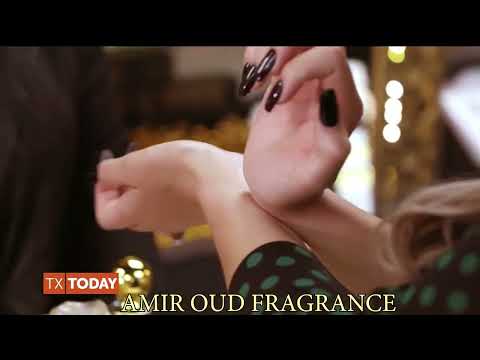
- Wait before buying. Test something on your wrist in the morning, go about your day, and check it again at lunch and in the afternoon. What is still there, and whether you like it, tells you a lot.
- Test in the season you plan to wear it. Fragrances behave differently in heat and humidity. A heavy oud that is perfect in winter can be overwhelming in a Texas summer.
Build a Fragrance Wardrobe, Not Just One Bottle
The idea of a single signature scent is appealing, but the reality of most signature scent wearers is that they have three or four fragrances they rotate depending on season, occasion, and mood. Consider thinking in terms of a wardrobe:
- A daytime/everyday scent, something clean, wearable, and not overwhelming
- An evening or occasion scent, something richer, bolder, more memorable
- A home scent, authentic scented bakhoor, a solid perfume, or a room mist that creates atmosphere rather than personal scent
- A layering base. Egyptian musk or a single-note oud that you wear under other fragrances to extend and personalize them
This approach gives you flexibility without requiring a massive collection. Three or four well-chosen bottles cover nearly every situation.
Starting With Arabic Perfumery
If you have not explored Arabic fragrance traditions before, luxury attar oil blendss and bakhoor are the best starting points. Attar oils give you a direct experience of materials like oud, rose, and amber on skin without the complexity of a multi-note composition. Bakhoor shows you how Arabic fragrance functions as a home and hospitality experience, not just a personal scent.
From there, you can begin exploring more complex blends, spray EDPs, and eventually custom compositions if you find yourself genuinely interested in the craft. There is a full world here, and finding your signature scent is the beginning of understanding it. When you are ready to explore, browse our full Arabic perfume collection to find a scent that is genuinely yours.